

Can You Remove Records from Trellis?
Trellis gathers court filings, docket information, and case summaries from state and local courts across the United States. Although the data is pulled from public records, Trellis provides a built-in request process that allows individuals to ask for redaction or limited removal under specific circumstances.
If your case appears on Trellis and includes personal details you want hidden, you can request redaction, removal of sensitive information, or suppression when appropriate.
This information is not legal advice. For legal guidance, consult an attorney in your state.
What Is Trellis?
Trellis is a legal research platform that compiles public court records and provides searchable access to dockets, filings, and judicial analytics. Lawyers, researchers, and the general public use it to track case outcomes and monitor litigation activity.
Because Trellis republishes public documents, cases can remain visible long after they’ve been closed or resolved. Fortunately, the platform offers a way to request the removal or correction of specific information.
How to Request Removal from Trellis
If you want Trellis to review your case for possible redaction or removal, follow these steps carefully:
1. Locate the Record You Want Removed
Visit Trellis.law and search for your case by name, docket number, or keyword. After you locate the case page, copy the full URL. You’ll need this link when submitting your request.
2. Submit a Redaction or Removal Request
Open the docket page for your case and scroll to the bottom. You will see a link to request redaction or removal of information. Once you open the Remove Records form, you’ll be asked to provide:
- Your full name and email address
- Confirmation that the case involves you personally
- A brief explanation of your request, such as privacy risk, outdated information, or reputational harm
- Any supporting documentation, including a court order if the record has been sealed or restricted
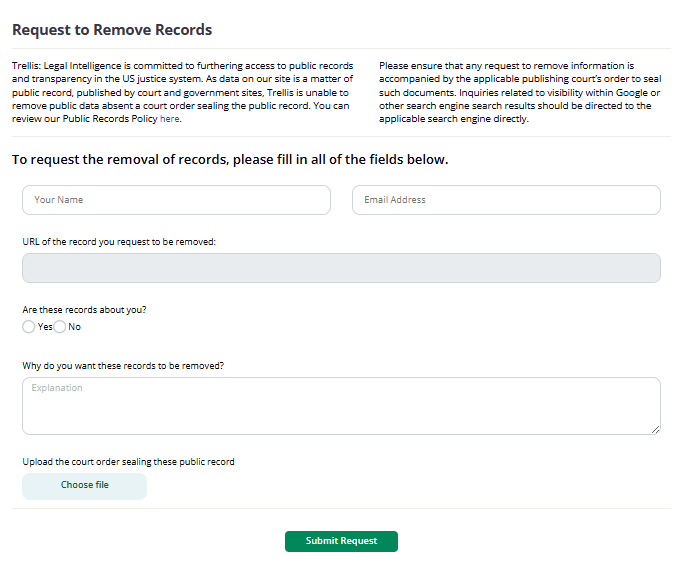
Trellis requires a separate submission for each URL you want reviewed, so repeat the process for any additional cases connected to your name.
3. Wait for Trellis to Review Your Request
Trellis processes requests in the order they are received. If your request is approved, Trellis will redact or remove sensitive details or update the listing based on the documentation provided. You will receive confirmation by email once a decision is made.
If Your Case Is Not Sealed
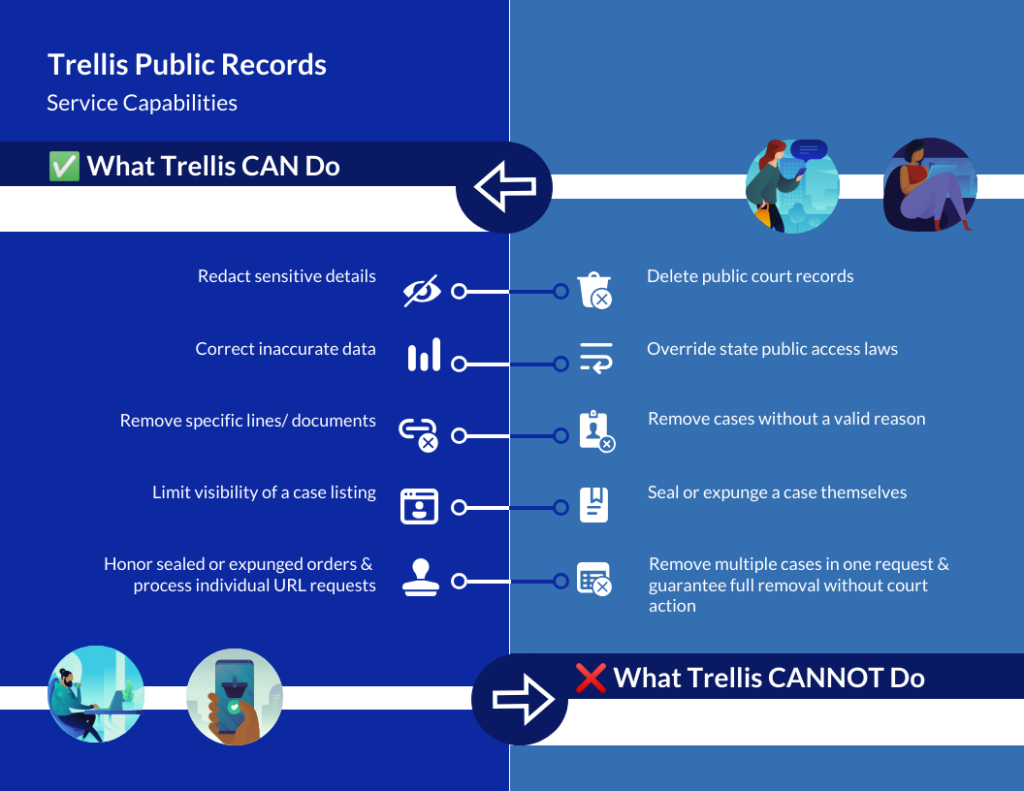
Trellis cannot fully remove court records that remain public in the original court system. If your case is still unsealed and visible through the court’s website or PACER-like systems, the platform may only make limited redactions.
To fully restrict your case, you may need to petition the court to seal or expunge the record. Sealing rules vary widely by state, so consult a licensed attorney to determine whether your case qualifies.
What If Trellis Will Not Remove It?
If Trellis denies your request or cannot remove the record due to state access laws, suppression is the best alternative. Suppression helps reduce the visibility of Trellis pages in search results by pushing stronger, more relevant content higher on Google.
Guaranteed Removals specializes in minimizing the online impact of court records and helping individuals rebuild a positive and accurate search presence. Our court record removal service and suppression strategies can take direct action to protect your name and ensure outdated information no longer dominates your results.
Legal Options or Expungement
If your case may qualify for sealing or expungement, you can file a petition with the court where the case originated. Once approved, a sealed or expunged order can significantly strengthen your Trellis removal request.
Because sealing laws differ from state to state, contacting a licensed attorney is the best way to confirm eligibility. You can also review state-by-state record relief guidelines through the National Center for State Courts.
This information is not legal advice. For legal guidance, consult an attorney in your state.
How Long Does Removal Take?
Trellis reviews requests in the order they arrive, and timelines can vary based on volume. Most users receive a response within a few weeks. If a court order is required, processing may take longer depending on the jurisdiction.
Once Trellis updates or redacts your information, Google may take up to ninety days to reflect the change across its search results.
FAQs
Can Trellis remove my record if the case was dismissed?
Possibly, but only if the case has been sealed or meets Trellis’s criteria for privacy-related redaction. Dismissed cases remain part of the public record unless the court formally restricts them. Including a sealed order or proof of legal restriction helps support your request.
Can I request removal without a court order?
Yes, but approval depends on the circumstances. Trellis may remove or redact information if you can demonstrate privacy risks, reputational harm, or sensitive involvement. Providing supporting details and documentation increases the likelihood of success.
Does Trellis follow right-to-be-forgotten laws?
No. Trellis operates under United States public record laws, not European digital privacy regulations. Removal decisions are made based on Trellis’s internal policies and applicable state rules. Because of this, requests must follow their redaction criteria rather than EU-style standards.
What if Trellis denies my request?
If your request is denied, suppression is the most effective next option. Guaranteed Removals helps reduce the visibility of Trellis results in Google by promoting accurate and positive content instead. This approach ensures search results reflect who you are today, not outdated legal information.
Can Guaranteed Removals assist with Trellis removals?
Yes. Our specialists manage the entire process, from preparing documentation to implementing suppression strategies. We work discreetly to help clients regain control of their online reputation and reduce exposure to negative legal content.


